
On his fifth day traveling across the Middle East on a key trip to assert American leadership at a chaotic time, Secretary Tillerson now faces his biggest challenge — and a possible "Ottoman slap" — after landing in Turkey and meeting with leaders of an ally incensed at the U.S. For Tillerson, the Trump administration's top diplomat, it has been a week of struggling to walk the line between abiding by President Trump's rhetoric and promises and declaring the U.S.'s role in the region as one of stability.
It's an especially unstable time as the conflict in Syria threatens to drag foreign powers into a world war, Iran extends its influence further into other countries from Lebanon to Yemen, America's Gulf allies continue to defy U.S. demands to end their feud, and Iraq searches for funds to rebuild its bombed-out cities and stave off a new generation of terrorists.
"Stability" seemed to be the theme of the trip, with Tillerson praising allies like Kuwait and Jordan for being "partners in stability" and urging other countries to invest in "stabilization" efforts in Iraq and Syria, from ceasefire zones to de-mining and rubble removal missions.
But it's America's relationship with Turkey and the rising rhetoric between the allies that is helping to undermine stability now. As Turkish Foreign Minister Mevlut Cavusoglu said Monday, relations are at a "very critical point," where they'll either be fixed, "or deteriorate altogether."
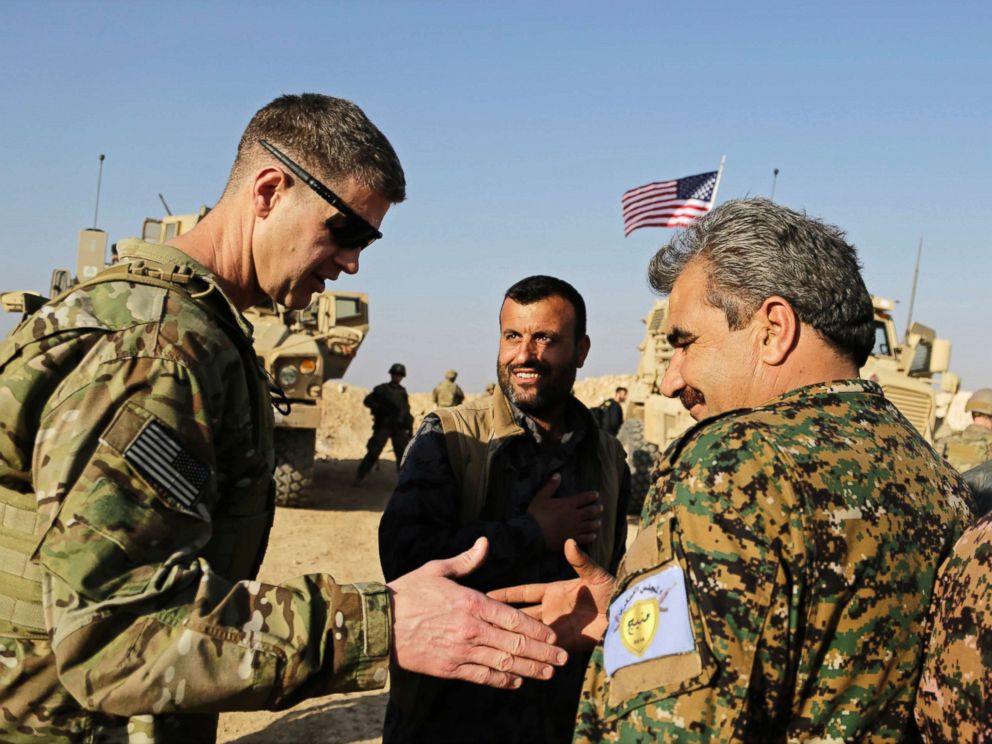
Last week, the top U.S. commander with the coalition to defeat ISIS visited the Syrian city of Manbij, a Kurdish stronghold near the border with Turkey. The Kurds, many of whom the U.S. has supported as de facto American ground forces against ISIS known as the YPG, are considered terrorists by Turkey. After Turkey threatened an invasion of Manbij and demanded U.S. troops leave, that commander, Lt. Gen. Paul Funk, said, "You hit us, we will respond aggressively. We will defend ourselves."
Source :- abcnews


 Hello, my name is Jack Sparrow. I'm a 50 year old self-employed Pirate from the Caribbean.
No comments:
Post a Comment